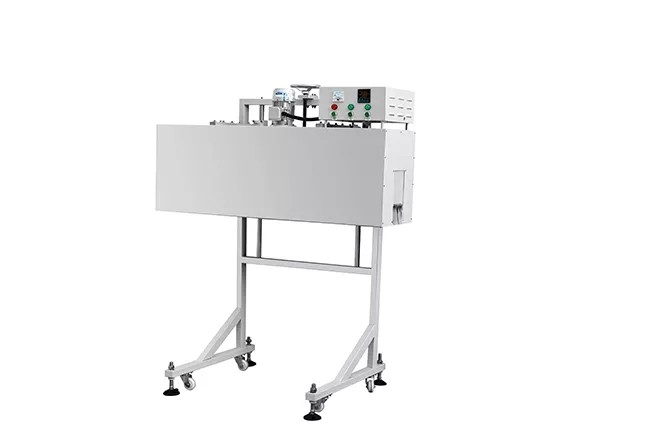
An electric shrink tunnel uses electric heating elements and forced hot air to activate shrink sleeve films. Because it does not require a steam generator, boiler, or water supply, it is often chosen for production lines that need a simpler installation or operate in facilities without existing steam infrastructure. This makes it a practical option for small and medium packaging lines as well as standalone labeling setups.
Heat control is central to consistent results. Electric tunnels typically provide adjustable temperature zones, allowing operators to match the heating profile to different film types such as PVC, PETG, OPS, or PLA. Since each film responds differently to heat, the ability to fine-tune temperature helps achieve smooth shrinkage without overheating the container or distorting printed graphics.
Airflow design also plays an important role in final package quality. A well-designed tunnel circulates hot air evenly around the container so the sleeve contracts uniformly across straight surfaces, curved shoulders, and tapered sections. Proper airflow reduces the risk of wrinkles, loose edges, and uneven shrink lines that can affect shelf appearance.
Conveyor speed and dwell time must be balanced with the heat settings. If containers move through the tunnel too quickly, the film may not fully conform before exiting the heating zone. If they move too slowly, the film may over-shrink or thin out. Adjustable conveyor speed allows operators to find the right balance for each product format and maintain consistent output during long runs.
Contact: Wendy
Phone: +86-13482266656
E-mail: wendy.jiang@sr-packing.com
Add: No. 18, Changting Road, Fengxian District, Shanghai, China


 Español
 русский
 Português
 Deutsch
 Français
 Italiano
 Nederlands
 Polski