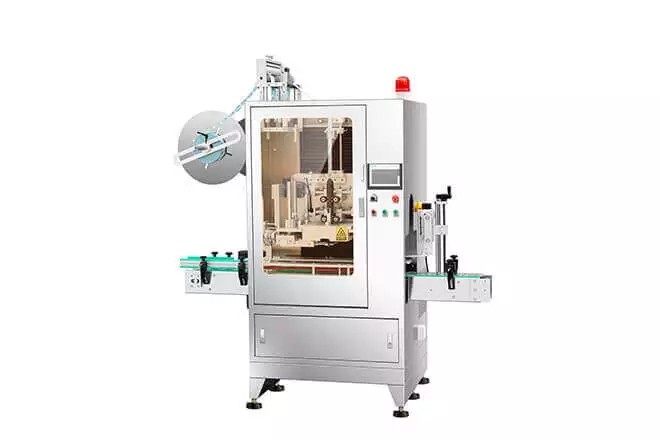
As consumer preferences evolve and packaging trends shift toward vibrant, full-coverage designs, many manufacturers find themselves at a crossroads. Traditional adhesive labels have served the industry well, but the demand for premium aesthetics and versatile branding is driving a significant transition toward shrink sleeve technology. However, upgrading your packaging line is a major strategic decision. Evaluating whether a sleeve labeling system aligns with your current production goals and future growth requires a careful assessment of several key factors.
Assessing Your Packaging Design and Geometry
The most immediate indicator that a business needs a sleeve labeling system is the physical shape of its containers. If your brand utilizes uniquely contoured, tapered, or asymmetrical bottles, traditional flat labels often result in wrinkling, peeling, or poor aesthetic presentation. Shrink sleeves are uniquely engineered to conform perfectly to complex geometries. Furthermore, if your marketing strategy relies on high-impact, edge-to-edge graphics or requires a matte, textured finish to convey a premium feel, transitioning to a sleeve labeling system provides the necessary canvas to achieve these design goals seamlessly.
Evaluating Production Volume and Operational Efficiency
Transitioning to shrink sleeves also requires an honest evaluation of your production throughput. Sleeve labeling systems are designed for high-speed, continuous production runs. If your business is scaling up and moving away from low-volume, manual, or semi-automatic labeling processes, investing in this technology can drastically improve operational efficiency. Modern sleeve labeling systems offer rapid changeover times, allowing businesses to handle multiple SKUs with minimal downtime. However, for extremely low-volume operations, the initial setup and film inventory requirements may need to be weighed against current production demands.
Factoring in Sustainability and Consumer Safety
Modern packaging transitions must also consider environmental impact and consumer safety. Shrink sleeves can be manufactured using recyclable materials, and advancements in wash-off adhesive technologies make them increasingly compatible with recycling streams. Additionally, the full-body application of a shrink sleeve inherently provides a tamper-evident seal, which is a critical safety feature for food, beverage, and pharmaceutical products. If enhancing product security and aligning with sustainability initiatives are top priorities for your brand, a sleeve labeling system offers a comprehensive solution.
Calculating the Total Cost of Ownership
Finally, businesses must look beyond the initial capital expenditure. While a sleeve labeling system represents a significant investment, the long-term return on investment is often substantial. By eliminating the need for pre-printed containers, reducing label waste, and enhancing shelf appeal that drives sales, the technology frequently pays for itself. When evaluating the transition, it is crucial to calculate the total cost of ownership, including equipment, film consumption, and energy usage, against the projected increase in brand value and production efficiency.
Contact: Wendy
Phone: +86-13482266656
E-mail: wendy.jiang@sr-packing.com
Add: No. 18, Changting Road, Fengxian District, Shanghai, China


 Español
 русский
 Português
 Deutsch
 Français
 Italiano
 Nederlands
 Polski