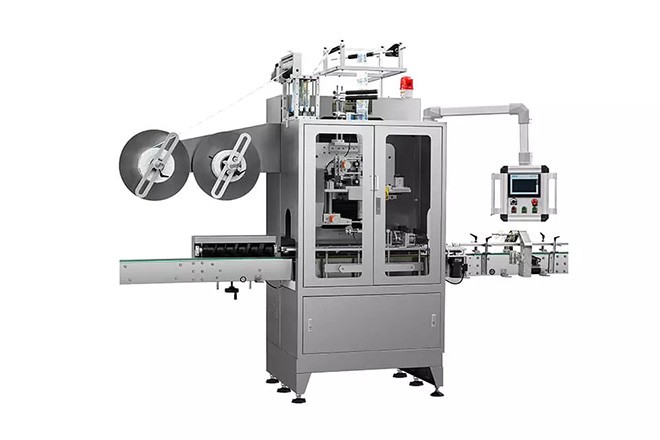
For packaging operations, the full-body sleeve labeling machine is no longer viewed simply as a decorative finishing tool. It is increasingly seen as a strategic component of the production line, one that influences product appearance, consumer confidence, changeover speed, waste control, and overall line efficiency. As container shapes become more varied and production runs become shorter, the ability to apply sleeves consistently and reliably is becoming a more important part of packaging planning.
Full-Body Decoration Is Reshaping Container Branding
Full-body sleeve labeling allows brands to use the entire container surface for visual communication. This is especially valuable in categories where shelf competition is intense and product differentiation depends on strong packaging design. A single sleeve can carry brand identity, flavor or variant indicators, color-coded product families, usage instructions, ingredient information, and promotional graphics without requiring changes to the container itself.
For beverage, personal care, household, and food products, this level of coverage supports stronger brand recognition. Products that once relied on small adhesive labels can now present a more complete visual identity, helping consumers identify variants, understand product benefits, and connect with the brand more quickly at the point of purchase.
The full-body sleeve labeling machine makes this possible by applying sleeves with consistent positioning and controlled shrink performance. When the process is well tuned, the finished package appears uniform, professional, and visually stable across different production runs.
Container Shape Diversity Is Driving Equipment Adaptability
One of the main reasons the full-body sleeve labeling machine is gaining importance is the growing variety of container shapes used across consumer packaged goods. Modern packaging is no longer limited to standard cylindrical bottles. Many brands now use tapered necks, curved bodies, slim formats, square profiles, rounded shoulders, wide-mouth jars, and specialty containers to create visual distinction.
These shapes improve shelf appeal but also create labeling challenges. A sleeve must be applied, positioned, and shrunk with enough precision to avoid wrinkles, gaps, misalignment, or uneven tension. If the application process is not matched to the container profile, the finished package may look inconsistent, even when the sleeve design is strong.
Tamper Evidence Is Becoming a Practical Packaging Requirement
Tamper evidence is increasingly important across food, beverage, personal care, supplements, household, and pharmaceutical products. Consumers expect visible assurance that a product has not been opened or disturbed before purchase. A full-body sleeve applied around the cap, neck, or upper portion of a container can help provide that assurance without requiring a separate sealing component.
The full-body sleeve labeling machine supports this function by applying sleeves with consistent positioning and reliable shrink performance. For brands that want both decoration and product security in one operation, sleeve labeling can simplify packaging design while improving consumer confidence.
Contact: Wendy
Phone: +86-13482266656
E-mail: wendy.jiang@sr-packing.com
Add: No. 18, Changting Road, Fengxian District, Shanghai, China


 Español
 русский
 Português
 Deutsch
 Français
 Italiano
 Nederlands
 Polski