Yogurt packaging has expanded well beyond a single cup size or format. Modern dairy lines may handle small single-serve portions, family-size tubs, drinkable yogurt bottles, layered dessert cups, and snack-style containers. Each format brings different expectations for branding, regulatory text, allergen information, and visual appeal.
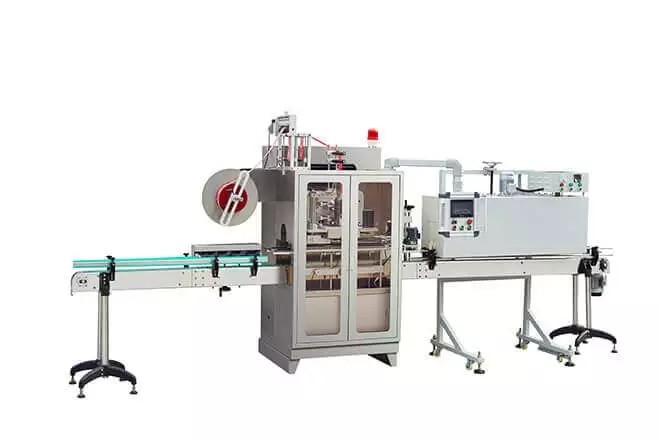
The yogurt cup sleeve labeling machine supports this diversity by applying continuous sleeve labels with consistent positioning across varied container profiles.
Tapered Containers Require Careful Sleeve Positioning
Most yogurt cups narrow from rim to base, which means the sleeve must accommodate a continuously changing circumference during application and shrinking. This is fundamentally different from labeling a straight-walled bottle or jar, where the diameter remains constant.
If sleeve cutting, placement, or heat application is not precisely matched to the cup profile, the result can include loose film near the base, excess tension near the rim, uneven shrinkage, or visible distortion of printed graphics. The yogurt cup sleeve labeling machine must therefore manage sleeve feed, cutting accuracy, positioning, and thermal shrinkage as a coordinated process.
Modern systems address this through adjustable forming guides, servo-controlled feed mechanisms, and shrink tunnels calibrated to the specific taper angle and diameter range of yogurt cups. This level of control helps ensure that the sleeve conforms smoothly to the container without compromising print clarity or structural appearance.
Too much thermal exposure can cause warping, softening, rim distortion, or changes in container shape. Too little heat can leave the sleeve loose, wrinkled, or poorly adhered. The yogurt cup sleeve labeling machine must therefore operate within a controlled thermal window that shrinks the sleeve film tightly without affecting the integrity of the cup.
Contact: Wendy
Phone: +86-13482266656
E-mail: wendy.jiang@sr-packing.com
Add: No. 18, Changting Road, Fengxian District, Shanghai, China


 Español
 русский
 Português
 Deutsch
 Français
 Italiano
 Nederlands
 Polski