In the evolving packaging machinery industry, demand for customized labeling and sleeving solutions continues to increase as manufacturers pursue higher efficiency, flexible production capabilities, and improved product presentation. Among these solutions, sleeving technology has become widely adopted for full-body labeling applications across various industries.
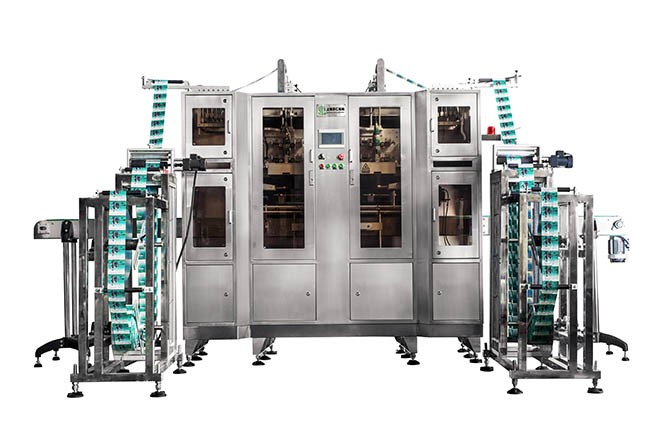
Within this development, OEM sleeving machine manufacturer plays a significant role in delivering tailored equipment designed to meet specific production requirements and integration needs.
The Shift Toward Customized Packaging Machinery
Packaging production lines are no longer limited to standardized machine configurations. Different industries now require equipment that can adapt to unique container shapes, production speeds, and labeling materials.
OEM manufacturing models support this shift by enabling sleeving machines to be designed according to specific operational requirements. This approach allows manufacturers to align machine performance with actual production conditions, improving overall efficiency and stability.
Customization has become a key direction in modern packaging equipment development.
System Integration in Automated Production Lines
Sleeving machines are typically part of a fully automated packaging line that includes filling, sealing, conveying, and shrinking systems. Smooth integration between these components is essential for maintaining continuous production flow.
OEM-designed sleeving systems are often configured to match existing line layouts and operational speeds. Proper synchronization ensures that containers move seamlessly between different stages without interruptions or delays.
System integration plays a critical role in achieving high-efficiency packaging operations.
Precision and Stability in Sleeve Application
Accurate sleeve placement is essential for ensuring consistent labeling quality. Even small deviations during application can affect the final appearance after the shrinking process.
Modern sleeving systems rely on precise control mechanisms, including sensor-based detection, synchronized timing, and stable mechanical feeding structures. These features help maintain consistent positioning across high-volume production runs.
Stability in application directly contributes to product presentation quality and brand consistency.
Adaptability for Different Packaging Formats
OEM sleeving machines are designed to handle a wide range of container types, including cylindrical, square, and irregular-shaped bottles. This adaptability is important for manufacturers producing multiple product lines.
Flexible machine configuration allows adjustments in conveyor structure, feeding speed, and labeling parameters. This ensures stable performance across different packaging formats without requiring major system changes.
Adaptability enhances production flexibility and operational efficiency.
Performance Requirements in High-Speed Production
As packaging demand increases, production lines are expected to operate at higher speeds while maintaining consistent quality. Sleeving machines must therefore balance speed, accuracy, and stability under continuous operation.
OEM manufacturing approaches focus on optimizing machine structure and control systems to support high-speed environments. This helps reduce production interruptions and maintain steady output levels.
High-performance capability is essential in competitive manufacturing environments.
Material Handling and Application Efficiency
Sleeving materials require controlled handling during feeding and positioning to ensure proper application. Variations in tension, alignment, or feeding speed can affect final results.
Well-designed systems ensure stable material delivery and precise application timing, reducing the risk of deformation or misalignment before the shrinking stage. This improves overall packaging consistency.
Efficient material handling is a key factor in production reliability.
Maintenance and Operational Reliability
Long-term operational stability depends on proper machine design and maintenance practices. Regular inspection of mechanical components and control systems helps ensure consistent performance.
OEM sleeving machines are typically designed with operational reliability in mind, reducing downtime and supporting continuous production cycles. Stable equipment performance is essential for maintaining workflow efficiency.
Reliability contributes directly to long-term production success.
Contact: Wendy
Phone: +86-13482266656
E-mail: wendy.jiang@sr-packing.com
Add: No. 18, Changting Road, Fengxian District, Shanghai, China

 Español
 русский
 Português
 Deutsch
 Français
 Italiano
 Nederlands
 Polski