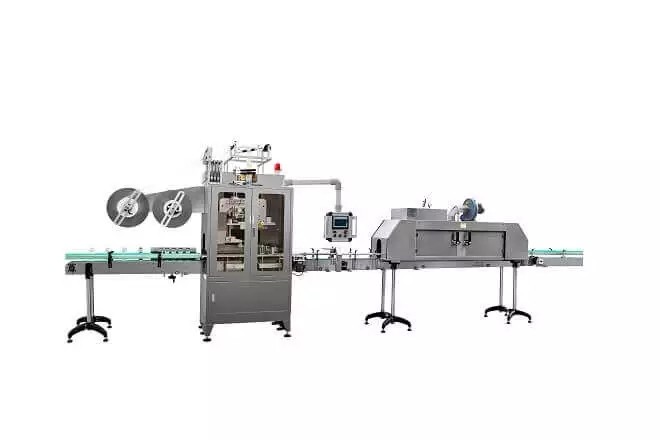
In modern packaging automation, sleeving machine for bottles systems are widely used to apply shrink sleeve labels in high-speed production environments. These systems are designed to balance speed, precision, and stability across continuous manufacturing lines. However, as production speed increases, maintaining application accuracy becomes more challenging and requires tighter system control.
Understanding how speed influences performance is essential for optimizing packaging quality and reducing operational inconsistencies.
The Relationship Between Speed and Timing Precision
In a sleeving machine for bottles line, every application cycle depends on precise timing between bottle detection, sleeve feeding, and positioning. When production speed increases, the available time for each cycle decreases.
This reduction in timing margin makes the system more sensitive to small delays or fluctuations. Even minor deviations in detection or feeding speed can affect sleeve placement accuracy.
Impact of High-Speed Operation on Positioning Control
At higher production speeds, bottle movement through the conveyor becomes faster and more continuous. This increases the demand for highly accurate positioning control to ensure sleeves are applied at the correct location.
If positioning systems cannot respond quickly enough, sleeves may shift slightly on the bottle surface. These small deviations become more visible after the heat shrinking process, affecting final packaging appearance.
Sensor Response and Detection Limitations
Sensors play a critical role in detecting bottle position and triggering sleeve application. When production speed increases, sensors must respond faster and with higher accuracy.
Any delay in signal processing or detection can lead to mistimed application. This can result in sleeves being placed too early or too late, reducing overall labeling precision.
Material Feeding Stability Under High-Speed Conditions
Sleeve materials must be delivered consistently to the application point. At higher speeds, material feeding systems are placed under greater operational stress.
If feeding tension or alignment is not properly controlled, sleeves may stretch or shift during rapid movement. This can directly affect how accurately the sleeve is positioned on each bottle.
Mechanical Synchronization Challenges
High-speed operation requires perfect synchronization between conveyors, applicators, and downstream shrinking systems. If one component lags behind, system balance is affected.
Even slight mismatches in mechanical timing can accumulate, leading to reduced accuracy and inconsistent labeling results across production batches.
Increased Sensitivity to Vibration and System Stability
As production speed increases, the impact of vibration becomes more significant. Small mechanical vibrations in the conveyor or application unit can cause bottle movement during sleeve placement.
This movement reduces positioning stability and can result in uneven sleeve application. Maintaining structural rigidity is essential for high-speed accuracy.
Heat Shrink Stage Amplification of Errors
Errors that occur during sleeve application often become more noticeable after the shrinking process. High production speeds may introduce small misalignments that are not immediately visible.
However, once heat is applied, these deviations become fixed, making early-stage accuracy even more important in high-speed environments.
Balancing Efficiency and Accuracy
While increasing production speed improves output efficiency, it must be carefully balanced with system accuracy. Operating beyond optimal speed ranges can reduce overall product quality and increase rejection rates.
Manufacturers must ensure that sleeving machines are configured to maintain both performance and precision under expected production conditions.
System Optimization for Stable High-Speed Performance
To maintain accuracy at higher speeds, sleeving systems require optimized coordination between mechanical structure, sensor systems, and material feeding mechanisms. Regular calibration and system adjustments help maintain stable performance.
A well-balanced system can achieve both high throughput and consistent labeling quality without compromising operational stability.
Contact: Wendy
Phone: +86-13482266656
E-mail: wendy.jiang@sr-packing.com
Add: No. 18, Changting Road, Fengxian District, Shanghai, China


 Español
 русский
 Português
 Deutsch
 Français
 Italiano
 Nederlands
 Polski