The Taper Problem: Why Cups Break Conventional Labeling Logic
Almost every sleeve labeling machine ever built was designed with a fundamental assumption: the container is a cylinder. Bottles, cans, and jars share a consistent diameter from top to bottom, which makes film cutting, sleeve application, and heat shrinking relatively straightforward. Plastic cups shatter that assumption.
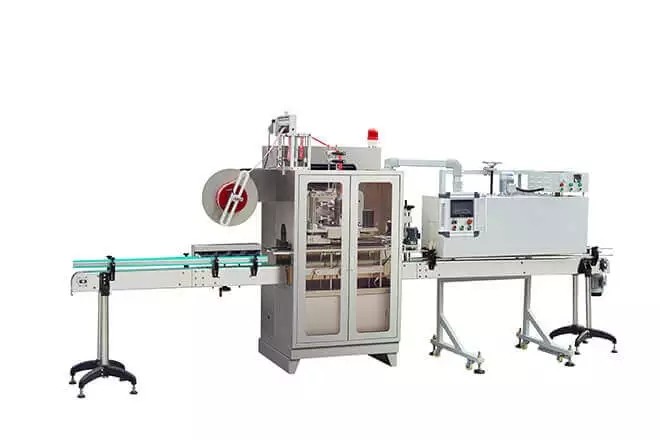
A typical cold-drink cup tapers dramatically from rim to base, sometimes narrowing by 30% or more over a span of just a few inches. This means the sleeve must shrink unevenly more at the bottom, less at the top without wrinkling, bridging, or tearing. Modern plastic cup sleeve labeling machines address this through adaptive mandrel systems and multi-zone heat tunnels that create graduated thermal profiles, essentially teaching the film to conform to geometry that would defeat a standard shrink tunnel.
The very thing that makes plastic cups attractive their lightness and low material cost also makes them one of the most challenging substrates for heat-based labeling. A PET or PP cup wall can be less than half a millimeter thick. Apply too much heat, and the cup deforms before the sleeve ever shrinks. Apply too little, and the film sits loose and wrinkled. The latest generation of plastic cup sleeve labeling machines navigates this thermal tightrope through precision-controlled steam tunnels and infrared heating arrays that deliver heat in precisely calibrated bursts. Some systems now employ real-time thermal imaging to monitor the cup's surface temperature during the shrinking process, dynamically adjusting heat output to ensure the film contracts perfectly while the container remains structurally intact.
The plastic cup sleeve labeling machine has evolved to handle this staggering variety through rapid-changeover architectures. Tool-less adjustment mechanisms, digital recipe storage, and servo-driven film feed systems allow operators to switch between cup sizes in minutes rather than hours. This flexibility is not merely convenient it is essential in a market where product lineups change with the seasons and consumer trends can make a particular cup size obsolete within a single quarter.
Food safety regulations around the world are becoming increasingly stringent, and the plastic cup sleeve labeling machine plays a surprisingly important role in compliance. A full-body shrink sleeve, when properly applied with a perforated tear band, creates a tamper-evident seal that provides consumers with visible assurance that their beverage has not been opened or contaminated since leaving the production facility. For pre-packaged drinks, ready-to-drink coffees, and bottled smoothies sold in plastic cups, this function transforms the sleeve from a decorative element into a critical food safety component. The machine that applies it is, in effect, the final checkpoint in a chain of quality assurance that begins at the ingredient stage and ends in the consumer's hand.
Contact: Wendy
Phone: +86-13482266656
E-mail: wendy.jiang@sr-packing.com
Add: No. 18, Changting Road, Fengxian District, Shanghai, China


 Español
 русский
 Português
 Deutsch
 Français
 Italiano
 Nederlands
 Polski