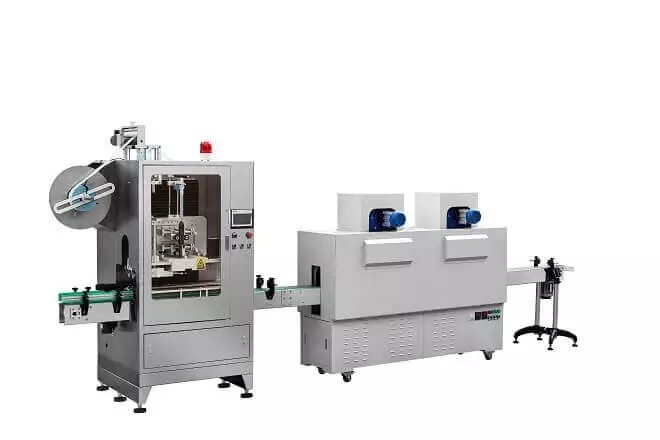
For manufacturers in the food and beverage, pharmaceutical, and personal care sectors, integrating shrink sleeve labeling technology is a pivotal step toward enhancing brand visibility and ensuring product security. However, when evaluating the acquisition of a shrink sleeve machine for bottles, businesses often encounter a wide variance in financial requirements. Rather than focusing on a static price tag, industry leaders must understand the multifaceted variables that dictate the total investment. The cost of these sophisticated packaging systems is heavily influenced by automation levels, throughput capacities, material compatibility, and long-term operational efficiencies.
Automation Levels and Throughput Capabilities
The most significant determinant of a shrink sleeve machine’s cost is its level of automation and production speed. Entry-level or semi-automatic systems are designed for small-scale operations or short production runs, offering a more accessible capital entry point. In contrast, fully automatic high-speed lines engineered for mass-market production command a higher investment. These premium systems utilize advanced servo-driven mechanics and PLC controls to achieve blistering throughput rates, sometimes processing hundreds of bottles per minute. The financial outlay for these high-capacity machines is justified by their ability to drastically reduce labor dependency and maximize output during peak seasonal demands.
Material Compatibility and Thermal Engineering
As the global packaging industry pivots toward sustainability, the ability of a machine to handle next-generation eco-friendly substrates significantly impacts its valuation. Traditional PVC films are relatively forgiving, but newer recyclable materials like PETG and OPS are thinner and highly sensitive to thermal fluctuations. Machines capable of processing these delicate, mono-material films require advanced tension control systems and precision-engineered, multi-zone heat tunnels. The sophisticated engineering needed to prevent film warping or tearing while maintaining high-speed operations adds to the initial equipment cost but is essential for brands committed to meeting modern environmental mandates.
Customization and Operational Flexibility
In an era of rapid product turnover and limited-edition campaigns, operational agility is a key value driver. Shrink sleeve machines that offer modular designs and tool-free changeover mechanisms allow manufacturers to switch between different bottle geometries and label sizes with minimal downtime. This flexibility often comes at a premium, as it requires intricate mechanical design and intuitive human-machine interface software. However, for businesses managing diverse SKUs, the ability to adapt quickly without extensive retooling translates into substantial long-term savings, making the initial investment a strategic enabler of market responsiveness.
Evaluating Total Cost of Ownership (TCO)
Smart procurement in the packaging sector requires shifting the focus from upfront capital expenditure to the total cost of ownership. High-quality shrink sleeve machines are built for durability, featuring robust components that withstand continuous industrial use and reduce the frequency of costly maintenance interventions. Furthermore, modern systems are increasingly designed with energy-efficient thermal tunnels and smart material-handling features that minimize film waste. By assessing factors such as energy consumption, material yield, and equipment longevity, businesses can accurately gauge the true financial impact of the machinery, ensuring that the investment delivers sustained profitability and a strong return over its operational lifecycle.
Contact: Wendy
Phone: +86-13482266656
E-mail: wendy.jiang@sr-packing.com
Add: No. 18, Changting Road, Fengxian District, Shanghai, China


 Español
 русский
 Português
 Deutsch
 Français
 Italiano
 Nederlands
 Polski