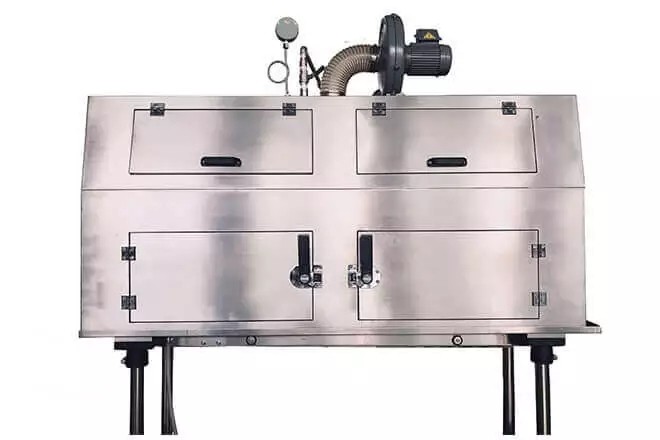
In the high speed world of beverage and consumer goods packaging, the application of a shrink sleeve is only half the battle. The transformation of a loose, oversized film into a tight, wrinkle free label is entirely dependent on the performance of the shrink sleeve heat tunnel. Often viewed as a simple heating element, this machine is actually a sophisticated thermal regulation system that dictates the final aesthetic quality and structural integrity of the package.
The Science of Heat Distribution
The primary function of a shrink sleeve heat tunnel is to apply precise thermal energy to the film, causing it to contract and conform to the container's shape. However, the challenge lies in the consistency of this heat. Modern tunnels utilize a combination of forced hot air and infrared radiation to ensure uniform heating.
If the heat distribution is uneven, the result can be "dog earing" (loose corners), wrinkling, or "blowouts" where the film tears due to excessive stress. High performance tunnels employ adjustable air knives and multi zone temperature controls to manage the airflow dynamics. This ensures that complex container geometries such as waisted bottles or ergonomic curves are covered smoothly without distorting the printed graphics.
Energy Efficiency and Sustainability
As energy costs rise and sustainability becomes a priority, the efficiency of the heat tunnel is under scrutiny. Traditional tunnels can be energy intensive, but newer designs are focusing on thermal recovery and insulation.
Zone Control: Advanced systems allow operators to heat only specific sections of the tunnel, reducing energy waste during low production runs or when processing smaller containers.
Steam vs. Hot Air: While hot air tunnels are standard for their versatility, steam tunnels are gaining traction for specific applications. Steam offers rapid heat transfer and can be more energy efficient for high volume lines, though it requires careful moisture management.
Integration with High Speed Lines
The shrink sleeve heat tunnel must act in perfect synchronization with the labeling machine and the conveyor line. Speed variability is a crucial feature; the tunnel must accommodate fluctuations in line speed without compromising the dwell time the duration the bottle spends inside the heat zone.
Modern tunnels are equipped with intelligent control systems that automatically adjust fan speeds and temperature setpoints based on the conveyor speed. This "smart" integration prevents overheating during slowdowns and ensures sufficient shrinking power during acceleration, maintaining a consistent "look and feel" across the entire production run.
Contact: Wendy
Phone: +86-13482266656
E-mail: wendy.jiang@sr-packing.com
Add: No. 18, Changting Road, Fengxian District, Shanghai, China


 Español
 русский
 Português
 Deutsch
 Français
 Italiano
 Nederlands
 Polski