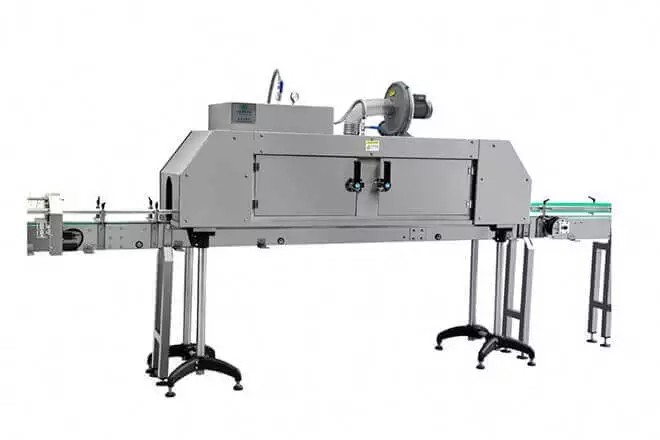
In the competitive landscape of beverage and food packaging, the final appearance of a product can make or break its shelf appeal. A wrinkled, misshapen, or unevenly shrunk label can signal poor quality to consumers. This is where the steam shrink tunnel machine proves its worth. Unlike traditional electric heat tunnels, steam tunnels utilize the uniform and constant temperature properties of steam to deliver a flawless, 360 degree shrink. However, selecting the right machine requires a deep dive into technical specifications, operational costs, and long term reliability.
The Science Behind the Steam
The core advantage of a steam shrink tunnel lies in its heating mechanism. By generating steam through an internal boiler or generator system, the machine creates a highly consistent thermal environment. Steam jets are directed at precise velocities (typically around 30-50 m/s) onto the packaged product, raising the film to its softening point rapidly.
This method is particularly effective for complex bottle shapes such as waisted sports drinks, square juice bottles, or multi packs where traditional hot air systems might leave cold spots. When evaluating a machine, look for an adjustable nozzle system that allows you to fine tune the direction and flow of the steam. This ensures that every contour of the container receives the exact amount of heat needed for a tight, glass like finish.
Key Technical Considerations
When navigating the market for a steam shrink tunnel, several technical parameters should guide your decision:
Temperature and Pressure Control: Precision is paramount. A high quality machine will feature a PLC (Programmable Logic Controller) intelligent control system, allowing operators to monitor steam pressure and temperature in real time via digital gauges. This ensures consistent shrink quality regardless of production speed.
Material and Durability: Given the humid environment, the machine's construction must resist corrosion. Ensure the tunnel and internal components are manufactured from high grade stainless steel (such as 304 stainless steel). Additionally, look for robust thermal insulation (often triple layered) to minimize heat loss, protect operators, and reduce energy consumption.
Water and Condensate Management: Steam generation inevitably leads to condensation. A well designed tunnel will feature an integrated condensate collection tray at the bottom to prevent water from pooling on the factory floor, maintaining a dry and safe production environment. Some advanced models also include self cleaning or descaling features to prevent mineral buildup in the nozzles.
Calculating the True Cost of Ownership
While the initial purchase price is a factor, smart procurement focuses on the total cost of ownership (TCO). A cheaper machine might consume significantly more steam or require frequent downtime for maintenance.
Consider the energy efficiency of the steam generation system. Machines with dual heaters or variable power modulation can adjust energy usage based on the production line's speed, preventing waste during slowdowns. Furthermore, evaluate the machine's compatibility with eco friendly films. As the industry shifts toward thinner, recyclable shrink sleeves (like PET-G or OPS), your tunnel must be capable of shrinking these sensitive materials without tearing or distorting them.
Contact: Wendy
Phone: +86-13482266656
E-mail: wendy.jiang@sr-packing.com
Add: No. 18, Changting Road, Fengxian District, Shanghai, China


 Español
 русский
 Português
 Deutsch
 Français
 Italiano
 Nederlands
 Polski